






GIFT City insurance hub India is rapidly becoming a significant development in the country’s financial and insurance landscape. The Gujarat International Finance Tec-City (GIFT City), located in Gujarat, is witnessing exponential growth in insurance and reinsurance activities, positioning itself as a global financial services centre.
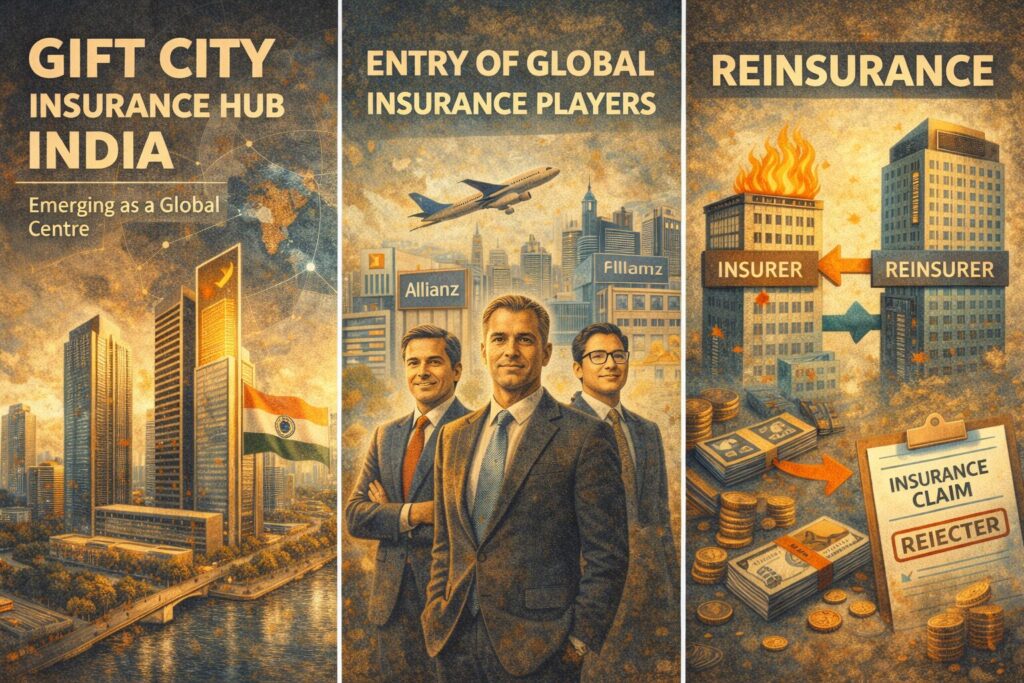
With the entry of international insurers, regulatory support, and favourable tax structures, GIFT City is transforming the way insurance business is conducted in India.
This article explains what GIFT City is, why it is becoming an insurance hub, and what it means for policyholders and industry stakeholders.
What is GIFT City?
GIFT City (Gujarat International Finance Tec-City) is India’s first operational International Financial Services Centre (IFSC). It has been developed to provide a globally competitive financial ecosystem within India.
The objective of GIFT City is to:
- Attract international financial services
- Enable offshore financial activities within India
- Provide a regulatory and tax-efficient environment
- Promote global participation in financial markets
The Insurance Regulatory and Development Authority of India (IRDAI) and the International Financial Services Centres Authority (IFSCA) have created a supportive framework to promote insurance and reinsurance business in this zone.
Rapid Growth in Insurance and Reinsurance Activity
GIFT City has seen a significant increase in insurance-related operations in recent years. Reports indicate that insurance and reinsurance business within GIFT City has grown multiple times over a short period.
Key developments include:
- Entry of global insurers and reinsurers
- Establishment of IFSC Insurance Offices (IIOs)
- Expansion of cross-border insurance services
- Increased participation in reinsurance placements
The presence of international players allows Indian insurers to access global risk capacity and pricing mechanisms.
Entry of Global Insurance Players
Several international insurance and reinsurance companies have established or are planning to establish operations in GIFT City.
This includes participation from:
- Global reinsurers
- Specialty insurers
- Offshore insurance entities
The presence of such entities enhances competition, improves underwriting practices, and brings global expertise into the Indian market.
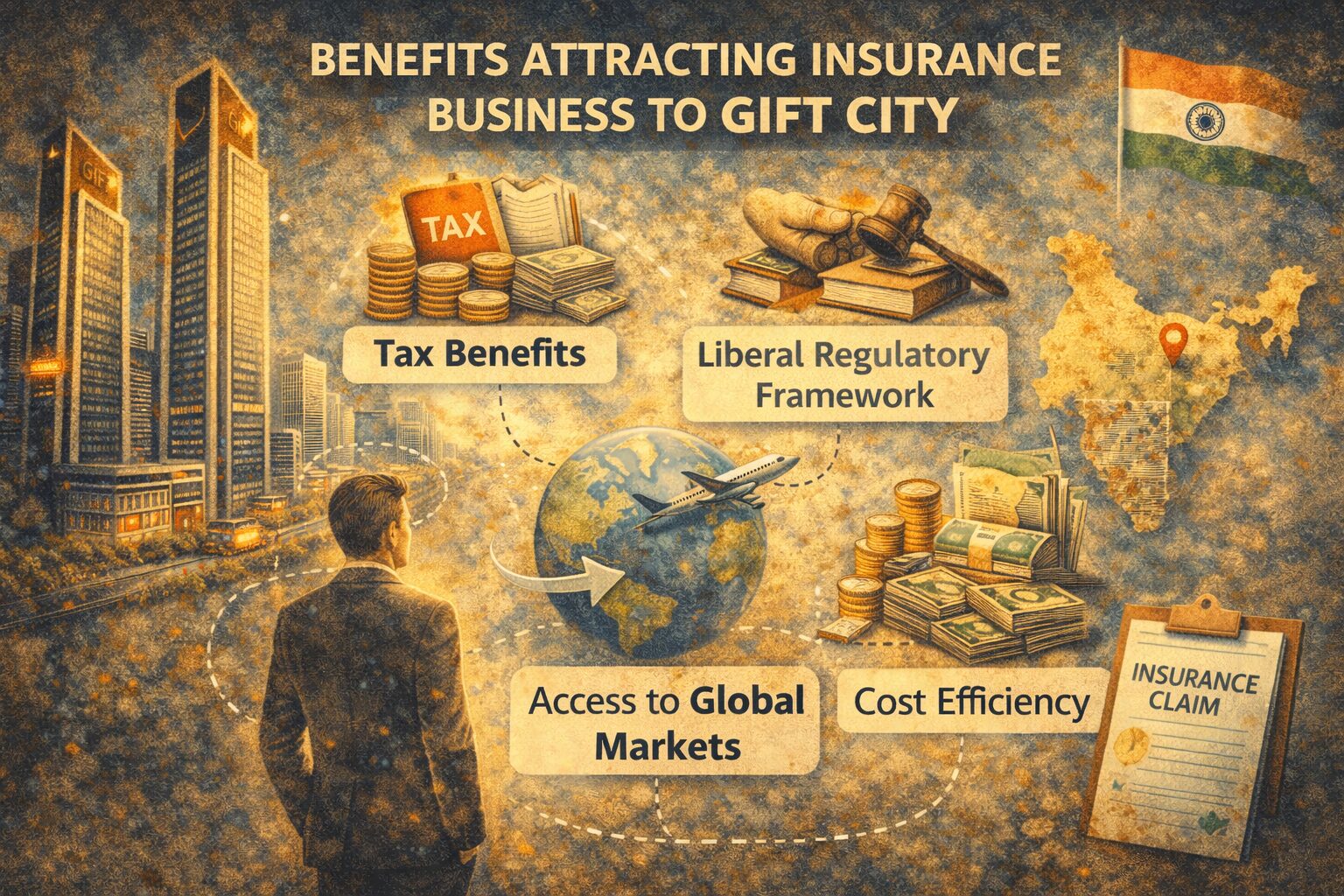
Why GIFT City is Attracting Insurance Business
There are several factors contributing to the growth of GIFT City as an insurance hub:
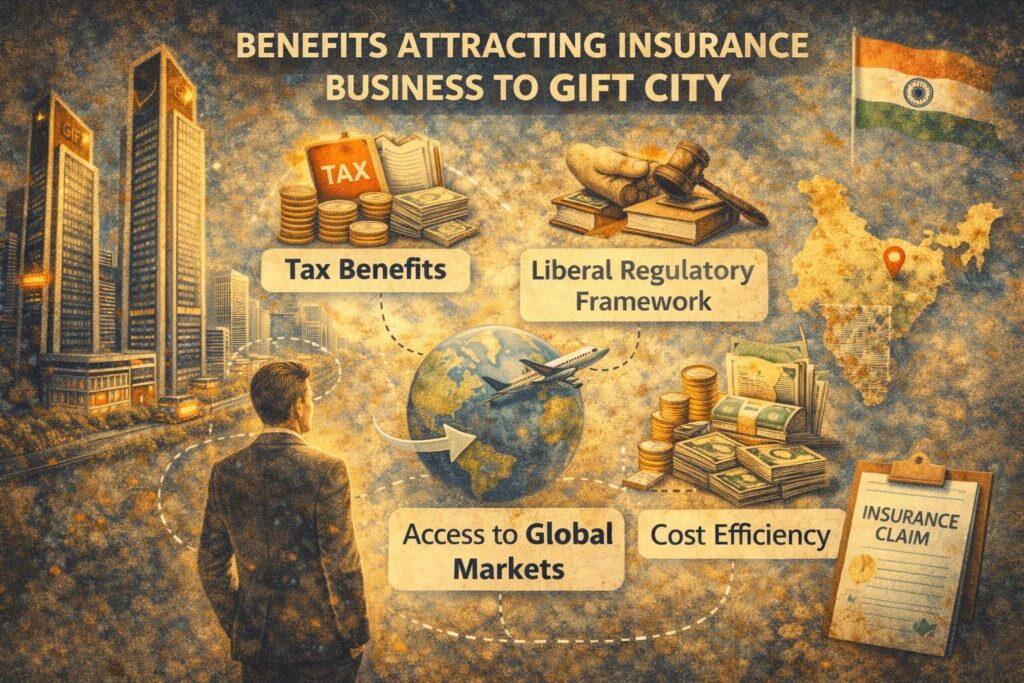
1. Tax Benefits
GIFT City offers tax incentives that make it attractive for global companies to operate from India.
2. Liberal Regulatory Framework
IFSCA provides a flexible regulatory environment compared to traditional domestic regulations, allowing innovation and faster approvals.
3. Access to Global Markets
Companies operating in GIFT City can transact in foreign currency and engage in cross-border insurance and reinsurance business.
4. Cost Efficiency
Operating costs in India are relatively lower compared to other global financial centres.
5. Strategic Location
GIFT City provides Indian insurers with proximity to global markets while retaining domestic advantages.
What is Reinsurance and Why It Matters
Reinsurance is insurance for insurance companies. It allows insurers to transfer a portion of their risk to global reinsurers.
This is important because:
- It increases risk-bearing capacity
- Helps in managing large losses
- Improves financial stability of insurers
- Enables coverage of large industrial and infrastructure risks
With GIFT City becoming a reinsurance hub, Indian insurers can access global reinsurance markets more efficiently.
Impact on Indian Insurance Industry
The development of GIFT City as an insurance hub is expected to have multiple impacts on the Indian insurance sector:
Increased Competition
Entry of global players will increase competition, leading to better products and pricing.
Improved Risk Assessment
Global expertise will improve underwriting standards and risk evaluation.
Better Claim Handling Practices
International practices may influence transparency and efficiency in claim settlements.
Expansion of Specialized Insurance Products
More customized and niche insurance products may become available.
What It Means for Policyholders
While GIFT City primarily operates at an institutional level, it indirectly benefits policyholders in several ways:
- Better pricing due to global competition
- Improved policy structures
- Access to specialized covers
- Stronger financial backing of insurers
- More stable insurance ecosystem
However, policyholders must still ensure proper policy understanding, correct sum insured, and compliance with conditions.
Opportunities for Businesses and Insurers
GIFT City opens new opportunities for:
- Indian insurers to expand globally
- Foreign insurers to enter Indian markets
- Brokers to access international capacity
- Corporates to obtain tailored risk solutions
Large risks such as infrastructure projects, energy, aviation, and marine sectors can particularly benefit from enhanced reinsurance support.
Challenges and Considerations
Despite rapid growth, certain challenges remain:
- Awareness about GIFT City among businesses
- Integration with domestic insurance markets
- Regulatory coordination between authorities
- Need for skilled professionals in specialized insurance areas
As the ecosystem matures, these challenges are expected to be addressed gradually.
Future Outlook
The future of GIFT City insurance hub India appears strong, with continued regulatory support and increasing participation from global insurers.
India is moving towards becoming not just a large insurance market but also a global insurance and reinsurance centre.
This shift will play a critical role in strengthening the country’s financial infrastructure and supporting large-scale economic growth.
Conclusion
GIFT City insurance hub India represents a major step in transforming India’s insurance landscape. With rapid growth in reinsurance activity and entry of global players, it is positioning itself as a key global financial centre.
While the benefits will unfold over time, the long-term impact is expected to be significant for insurers, businesses, and policyholders alike.
Understanding such developments helps stakeholders stay informed and prepared for changes in the insurance ecosystem.


